
Sesame, often referred to as the “queen of oilseeds,” is one of the oldest cultivated crops known for its high oil content and rich nutritional profile. Globally, sesame is valued for its versatile applications, ranging from food products to cosmetics and pharmaceuticals. Pakistan has emerged as a major player in the global sesame market, ranking as the 3rd largest exporter of high-quality sesame. The country recently surpassed annual sesame exports worth USD 1 billion, a remarkable achievement driven by the increasing global demand for sesame products. This growth reflects not only the quality of Pakistani sesame but also the potential to further expand its production and value addition capabilities. With its fertile lands and favorable climate, Pakistan is well-positioned to become a global leader in sesame production and exports.
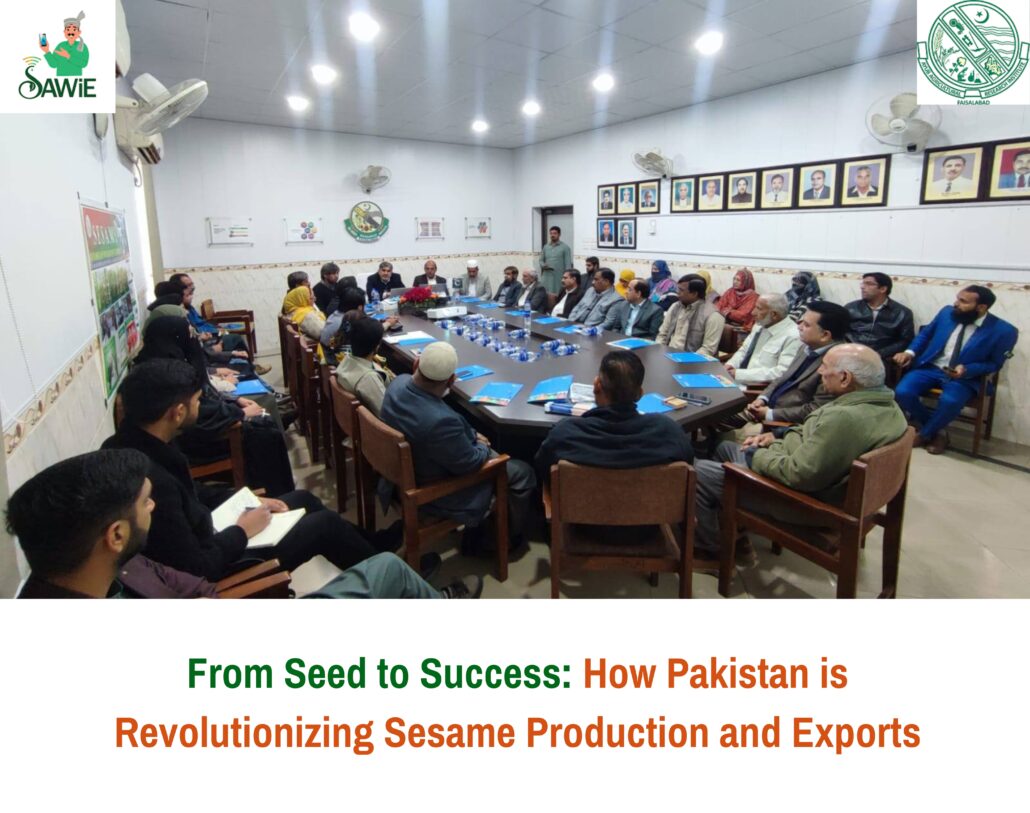
Despite this success, there remains significant room for improvement. Value addition, enhanced production techniques, and policy support are critical to unlocking the full potential of sesame as a high-value crop. Recognizing these opportunities, a stakeholders consultation meeting was organized at the Ayub Agriculture Research Institute (AARI) Faisalabad to discuss strategies for boosting sesame production and exports. SAWIE, a leading agricultural advisory organization, actively participated in this crucial event.
SAWIE’s Participation in the Stakeholders Meeting
SAWIE’s involvement in the meeting showcased its commitment to supporting smallholder farmers and advancing sustainable agricultural practices. The consultation meeting, chaired by Dr. Sajid Rahman, Director General Research of the Agriculture Department Punjab and AARI Faisalabad, provided a platform for diverse stakeholders to discuss key issues and opportunities in sesame production. Hafiz Saad bin Mustafa moderated the proceedings, ensuring a focused and productive dialogue.
The meeting brought together participants from both the public and private sectors, including sesame exporters, value addition industry representatives, seed companies, farmer organizations, business experts, nutritionists, and researchers from leading institutions such as:
- University of Agriculture Faisalabad (UAF)
- Government College University Faisalabad (GCUF)
- Nuclear Institute for Agriculture and Biology (NIAB)
- Ayub Maize Research Institute (AMRI)
- Ministry of National Food Security & Research (MNFSR)
- Punjab Oilseed Development (POD)
- Trade Development Authority of Pakistan (TDAP)
- Faisalabad Chamber of Commerce and Industry (FCCI)
- Pakistan Chamber of Agriculture
Key Highlights of the Meeting
The agenda of the meeting was designed to address critical aspects of sesame production and export, including:
- Review of local and imported high-value sesame products: Stakeholders examined the current landscape of sesame products in domestic and international markets to identify areas of improvement.
- Identification of possibilities for local value addition: Emphasis was placed on developing innovative products such as sesame oil, tahini, and sesame-based snacks to cater to global demand.
- Exploration of global markets for value-added sesame products: Participants discussed strategies to position Pakistan as a competitive exporter of processed sesame products.
- Development of strategies to enhance value addition in sesame: Focus was placed on adopting advanced processing techniques and fostering industry collaboration.
- Addressing bottlenecks and policy issues: Stakeholders highlighted challenges such as lack of infrastructure, policy gaps, and limited access to quality seeds.
- Fostering collaboration among stakeholders: The meeting emphasized the importance of partnerships between farmers, researchers, policymakers, and industry players to build a robust sesame value chain.
Discussions and Insights
The stakeholders engaged in detailed discussions on these agenda items, sharing insights and recommendations to enhance sesame production and exports. Key takeaways from the discussions included:
- Innovative Value-Added Products: There is a growing global demand for high-value sesame products such as organic sesame oil, hulled sesame, and tahini. Pakistan has the potential to capitalize on these opportunities by investing in processing facilities and marketing.
- Improved Farming Practices: Enhancing seed quality, adopting modern farming techniques, and providing technical training to farmers were identified as crucial steps to boost yields and ensure consistent quality.
- Sustainable Agricultural Practices: Given the environmental challenges faced by farmers, stakeholders highlighted the importance of promoting climate-resilient and sustainable farming practices to ensure long-term productivity.
- Market Access for Smallholder Farmers: Ensuring equitable access to markets for smallholder farmers is essential for inclusive growth. This includes developing supply chains that connect farmers directly to processors and exporters.
- Policy Support: Addressing policy bottlenecks, such as limited incentives for value addition and high export duties, is critical for creating a conducive environment for the sesame industry.
SAWIE’s Commitment to Farmers
SAWIE, as a key participant in the meeting, reiterated its dedication to empowering farmers and driving sustainable agricultural development. SAWIE’s role in the sesame value chain includes:
- Technical Advisory Services: Providing farmers with guidance on best practices for sesame cultivation, including seed selection, pest management, and post-harvest handling.
- Capacity Building: Organizing training sessions and workshops to equip farmers with the skills needed to adopt modern agricultural techniques.
- Sustainability Focus: Promoting the use of environmentally friendly practices to ensure long-term soil health and productivity.
- Collaboration: Facilitating partnerships between farmers, researchers, and industry players to create a seamless value chain.
SAWIE’s efforts align with the broader goal of enhancing sesame production and export potential, contributing to Pakistan’s economic stability.
Future Outlook for Sesame Production
The stakeholders consultation meeting concluded on an optimistic note, with participants agreeing on the need for a coordinated approach to unlock the full potential of sesame production in Pakistan. By focusing on value addition, addressing production challenges, and fostering collaboration, Pakistan can solidify its position as a global leader in sesame exports.
Key action points for the future include:
- Investment in Research and Development: Enhancing research efforts to develop high-yield, disease-resistant sesame varieties.
- Strengthening Infrastructure: Building processing facilities and improving logistics to support value addition.
- Market Diversification: Expanding into new markets and promoting Pakistani sesame products through international trade fairs and marketing campaigns.
- Policy Reforms: Advocating for policies that support farmers, incentivize value addition, and streamline export processes.
Conclusion
Sesame represents a significant opportunity for Pakistan’s agricultural sector, offering immense potential for economic growth and rural development. The consultation meeting at AARI Faisalabad served as a vital platform to discuss strategies for enhancing sesame production and exports. SAWIE’s active participation underscores its commitment to empowering smallholder farmers and advancing sustainable agricultural practices.
As Pakistan’s demand for sesame continues to rise, collaborative efforts among stakeholders will be essential to drive innovation, enhance productivity, and ensure long-term success. With the right strategies and support, Pakistan can transform its sesame industry into a cornerstone of the country’s economic prosperity.